The Global Shift Toward Digital Transport
Across the global transport industry, manual ticketing systems are rapidly becoming outdated. Long queues, human errors, and inefficient cash handling are creating major operational bottlenecks for bus operators worldwide.
As passenger expectations evolve, the demand for fast, seamless, and digital-first booking experiences continues to grow. In this environment, adopting an e ticketing system for buses is no longer just an upgrade—it is a strategic necessity for growth in 2026 and beyond.
Key Challenges in Traditional Bus Ticketing Systems
Traditional ticketing models are still used in many regions, but they come with significant limitations that impact efficiency and profitability:
- Revenue leakage due to manual errors and fraud
- Double booking and seat allocation issues
- Dependence on cash-based transaction
- Lack of real-time visibility into operation
- Limited control over agents and distribution channels
- Poor customer booking experience
These challenges make it difficult for bus operators to scale in a competitive and digital-first market.
Eliminating Revenue Leakage and Improving Transparency
One of the most critical benefits of a digital ticketing system is financial transparency. Manual systems often suffer from untracked transactions, unauthorized ticket sales, and reporting inconsistencies.
An e-ticketing system ensures that every booking is recorded in real time. All transactions are automatically logged, reducing the risk of fraud and improving audit accuracy. This provides transport businesses with full visibility into their revenue streams and strengthens financial control across all operations.
Enhancing Operational Efficiency and Fleet Management
Managing multiple routes, schedules, and buses manually can quickly become complex and inefficient. A digital ticketing system simplifies operations by centralizing control into a single platform.
With an integrated system, operators can:
- Manage routes and schedules from one dashboard
- Monitor real-time seat availability
- Adjust trips based on demand
- Prevent overbooking across channels
- Reduce dependency on manual coordination
This leads to smoother operations, reduced workload, and improved scalability.
Enabling Data-Driven Business Decisions
Digital ticketing systems generate valuable data that can significantly improve decision-making. Instead of relying on assumptions, operators gain access to real operational insights.
This includes:
- Identifying high-demand routes and peak travel periods
- Monitoring revenue performance across routes and vehicles
- Optimizing pricing strategies based on demand patterns
- Running targeted marketing campaigns using customer data
- Improving customer retention through personalized offers
Expanding Sales Through 24/7 Availability
Unlike manual ticket counters with limited operating hours, a digital system enables continuous ticket sales.
With an online bus e-ticketing system, operators can:
- Sell tickets 24/7 without interruption
- Reach customers globally through online platforms
- Expand distribution via agents and third-party integrations
- Increase visibility through web-based booking systems
This always-on availability significantly increases revenue potential.
Improving Customer Experience at Every Step
Customer experience plays a major role in business growth and retention. Digital ticketing systems greatly enhance the passenger journey by making booking faster and more convenient.
Passengers benefit from:
- Real-time seat selection
- Instant booking confirmation
- Faster checkout processes
- Transparent pricing and availability
- Reduced waiting times
A smooth booking experience builds trust, improves satisfaction, and increases repeat usage.
Real-World Impact of Digital Ticketing
Transport companies across different regions have already experienced measurable improvements after adopting digital ticketing software. Businesses report higher online sales, reduced operational pressure on physical counters, and improved financial transparency.
This demonstrates that digital transformation is not theoretical—it delivers real, measurable business outcomes.
Why It Matters Globally
The global transport industry is undergoing rapid digital adoption driven by several key factors:
- Increasing smartphone penetration worldwide
- Growth of digital payment ecosystems
- Rising demand for online booking convenience
- Expansion of digital-first travel platforms
Bus operators who adopt early gain a significant competitive advantage in both local and international markets.
Essential Features of a Modern E-Ticketing System
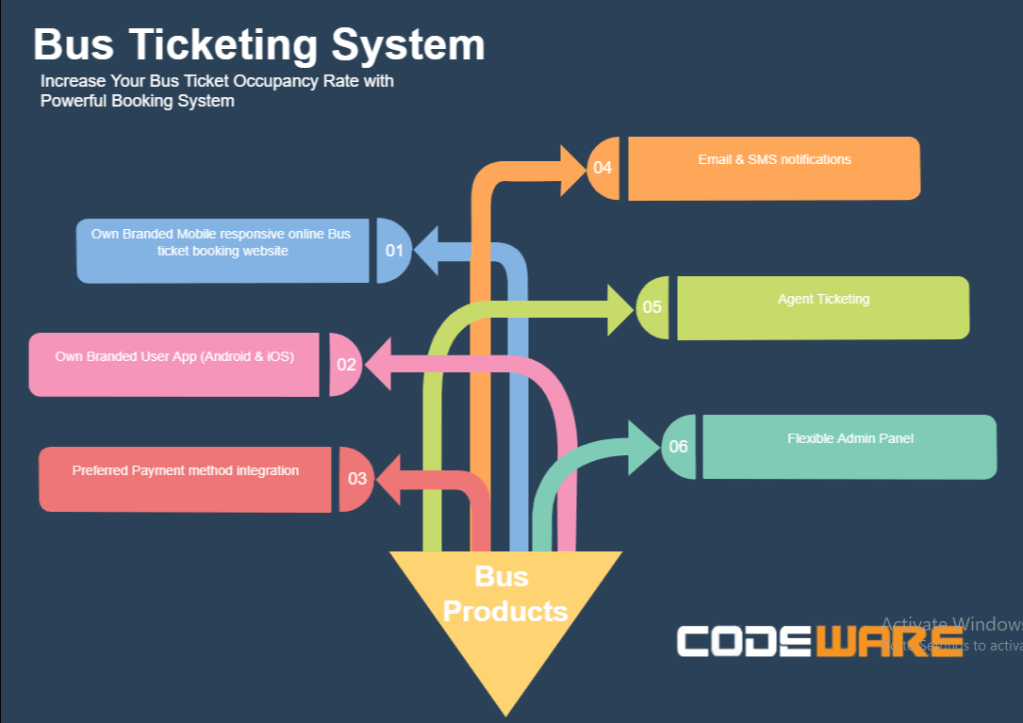
A scalable and future-ready system should include:
- Online ticket booking platform
- Real-time seat selection
- Route and schedule management
- Secure digital payment integration
- Instant ticket generation and delivery
- Agent and counter management system
- Advanced analytics and reporting tools
These features ensure operational efficiency and business scalability.
How to Start Your Digital Transformation
Transitioning to a digital system should be structured and gradual. Businesses should first evaluate their existing ticketing processes and identify inefficiencies. Next, they should choose a reliable e-ticketing software provider that supports scalability and integration. After setup, payment systems and operational workflows should be configured, followed by staff training. A phased transition from manual to digital operations ensures minimal disruption and smooth adoption.
Building a Future-Ready Transport Business
Digital transformation is reshaping the global transport industry. For bus operators, adopting an e ticketing system for buses is one of the most effective ways to increase efficiency, reduce revenue leakage, and improve customer experience.
In simple terms, it transforms traditional transport operations into a scalable, efficient, and data-driven business model built for the future.